

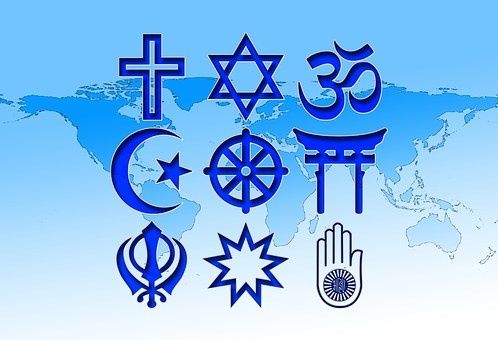
Jadis il y avait les empires. Puis la période des colonies. A la fin du XXème siècle, en ne parlait plus d’empires mais de zones d’influences, de blocs... : le bloc communiste, le « monde libre », chacun structuré par un traité : pacte de Varsovie, Traité de l’Atlantique Nord (OTAN). Le bloc communiste, à la manière de l’ancien empire romain, s’est divisé en deux : la Chine et l’URSS. Et le reste du monde, ou presque, était sous l’hégémonie d’un des blocs. Les guerres alors se faisaient sur les territoires sous influences... Il y avait aussi l’Europe, Ah l’Europe !... ou plutôt les Europes (voir autre article). Et lorsqu’un « empire » se disloquait, c’était souvent dans la souffrance (URSS, Yougoslavie, Tchécoslovaquie, Tchétchénie...). Nous avions déjà évoqué cette « histoire » dans l’article sur la tectonique des peuples. C’est ainsi que C. Barbot interprète la formation des nouveaux blocs, avec les mêmes explications quant aux racines religieuses et surtout les actuelles zones musulmanes avec leurs variantes : chiite, sunnite, asiatique, africaine, zones étant amenées à se structurer, se « solidifier ».
Ah, la nature humaine !... On critique alors que cela semble dans l’ordre des choses.
RENE JUSVEL
WORLD - The return of the blocks
Formerly there were empires. Then the period of the colonies. At the end of the 20th century, there was no talk of empires but zones of influence, of blocs ...: the communist bloc, the "free world", each structured by a treaty: the Warsaw Pact, the Treaty of North Atlantic (NATO). The communist bloc, in the manner of the ancient Roman empire, split in two: China and the USSR. And the rest of the world, or almost, was under the hegemony of one of the blocks. The wars then took place on the territories under influence ... There was also Europe, Ah Europe! ... or rather the Europes (see other article). And when an "empire" was dislocated, it was often in the suffering (USSR, Yugoslavia, Czechoslovakia, Chechnya ...). We had already mentioned this "story" in the article on the tectonics of peoples. Thus C. Barbot interprets the formation of the new blocks, with the same explanations as for the religious roots and especially the current Muslim zones with their variants: Shiite, Sunni, Asian, African, zones being brought to be structured, " solidify ".
Ah, human nature! ... It is criticized then that it seems in the order of things.


