

Etonnant et pourtant si évident : le dernier livre, du mathématicien Wolfgang Lucus, pose enfin une explication et interprétation des mathématiques et, plus précisément, physique mathématique. Il y développe son article paru dans Mathematical Reviews qui lui avait valu la Médaille Fields. De quoi s’agit-il ? Pour résumer, il affirme que les mathématiques, à l’instar du langage courant, science, expression artistique, religion, est un langage, une interprétation du monde extérieur en fonction de nos outils de perception. Donc elles sont conformes au monde et aux moyens de perception de ce monde par l’être humain. D’où le fait troublant que le monde puisse être vu comme l’expression même des mathématiques. Ceci explique la traduction possible si « parfaite » de notre monde sous forme d’équations, les constantes n’étant alors (sauf constantes de mathématiques pures), que des correspondances entre les diverses unités de mesures créées par l’homme. Et cela permet la modélisation, moyen d’investigation: la mise en équations du monde par des moyens informatiques poussés qui, à partir d’une situation réelle spatiale donne l’équation correspondante.
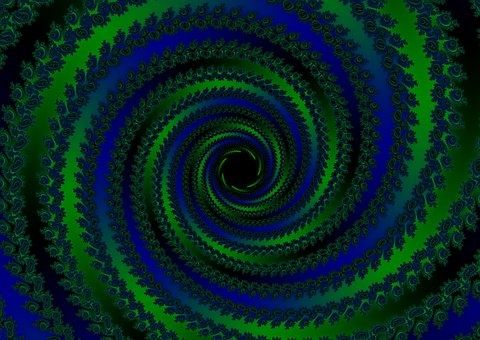
La forme d’une galaxie spirale serait-elle réduite à une équation ? Et pourquoi cette équation ?...
RENE JUSVEL
MATHEMATICS - Almost real mathematics ...
Surprising and yet so obvious: the last book, by the mathematician Wolfgang Lucus, finally raises an explanation and interpretation of mathematics and, more precisely, mathematical physics. He developed his article in Mathematical Reviews which earned him the Fields Medal. What is it about ? To summarize, he asserts that mathematics, like everyday language, science, artistic expression, religion, is a language, an interpretation of the outside world according to our tools of perception. So they are consistent with the world and the means of perception of this world by the human being. Hence the disturbing fact that the world can be seen as the very expression of mathematics. This explains the possible "perfect" translation of our world in the form of equations, constants being then (except constants of pure mathematics), only correspondences between the various units of measures created by the man. And this allows the modeling, means of investigation: the setting in equations of the world by computed computing means which, starting from a real spatial situation gives the corresponding equation.
Would the shape of a spiral galaxy be reduced to an equation? And why this equation? ...


