

Mars, planète proche, est sujette à nombre de recherches, d’explorations. La dernière en date, la mission Insight, a pour but d’explorer le sous-sol martien, mais pas que…
Un mystère réside en son champ magnétique, apparemment un peu spécial, pas comme notre Terre. Déjà nettement plus faible, les premiers résultats semblent poser interrogations !?
Pour l’instant, on envisageait le champ magnétique comme un effet dynamo dû à la rotation de fer liquide au centre de l’astre. L’hypothèse nouvelle, suite aux constatations sur Mars, serait qu’il serait très dépendant, non pas de l’intérieur, mais de l’extérieur, mieux, des satellites qui tourneraient autour ! Pour Mars, les 2 petits satellites Phobos et Déimos.
D’où, d’ailleurs, le fort champ magnétique terrestre lié à la Lune, nettement plus volumineuse, les champs magnétiques des géantes gazeuses Jupiter, Saturne, Uranus et Neptune.
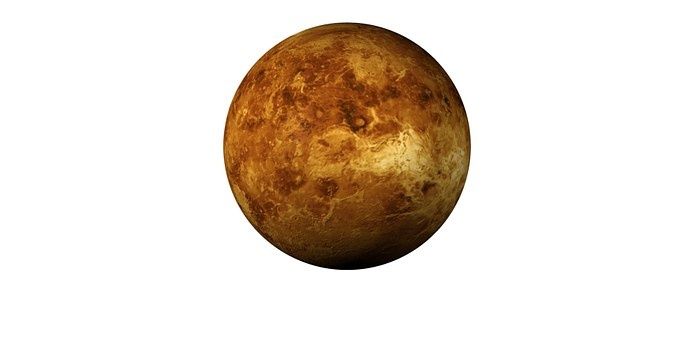
Alors que point de magnétisme pour Vénus (car point de satellite).
Et cela rejoint le cas du Soleil et, en conséquence, des cycles de tâches solaires, suivant les périodes de révolutions des planètes autour. Nous en avions déjà parlé ici, il y a fort longtemps.
Bon, ce n’est pas aussi simple que ça : d’autres facteurs entrent évidemment en ligne de compte et on n’a pas d’explication à cette cause.
RENE JUSVEL
ASTRONOMY - Insight and the magnetism of Mars
Mars, a nearby planet, is subject to many searches and explorations. The latest, the Insight mission, aims to explore the Martian subsoil, but not only ...
A mystery lies in its magnetic field, apparently a bit special, not like our Earth. Already much weaker, the first results seem to pose questions !?
For now, we considered the magnetic field as a dynamo effect due to the rotation of liquid iron in the center of the star. The new hypothesis, following the observations on Mars, would be that it would be very dependent, not from inside, but from outside, better, satellites that would turn around! For Mars, the 2 small satellites Phobos and Déimos.
From where, moreover, the strong magnetic field terrestrial related to the moon, much more voluminous, the magnetic fields of gas giants Jupiter, Saturn, Uranus and Neptune.
While point of magnetism for Venus (because satellite point).
And this joins the case of the Sun and, consequently, cycles of solar tasks, according to the periods of revolutions of the planets around. We had talked about it a long time ago.
Well, it's not as simple as that: other factors obviously come into play and we have no explanation for this cause.


